
2026 shifts auditing from tick-box compliance to strategic environmental performance review.
Now evaluate climate risks, lifecycle impacts and top management accountability in every audit.
Become your organisation’s go-to ISO 14001:2026 internal compliance expert.
Training includes audit simulations, checklist prep and real-world EMS case studies.
Get certified — enquiry@eascertification.com
ISO 14001:2026 is live — internal auditors are the first line of defence in your EMS transition.
2026 shifts auditing from tick-box compliance to strategic environmental performance review.
Now evaluate climate risks, lifecycle impacts and top management accountability in every audit.
Become your organisation’s go-to ISO 14001:2026 internal compliance expert.
Training includes audit simulations, checklist prep and real-world EMS case studies.
Get certified — enquiry@eascertification.com
What is ISO 14001 Internal Auditor Training Course?
ISO 14001 Internal Auditor Training Course aims to provide participants with the knowledge and practical skills required to perform internal audits of an Environmental Management System (EMS). The course is designed based on ISO 14001 standards and follows the auditing guidelines of ISO 19011, enabling professionals to assess and report on the effective implementation and maintenance of EMS within an organization.
This training helps individuals understand how internal audits contribute to continuous improvement, regulatory compliance, and environmental performance. Participants will learn how to evaluate processes, identify non-conformities, and recommend corrective actions that strengthen the EMS framework.
With the introduction of ISO 14001:2026, internal auditing has become more dynamic and data-driven. The updated version emphasizes climate risk considerations, real-time monitoring, and sustainability integration, making internal audits more strategic and impactful than ever before.
Who Should Take ISO 14001 Internal Auditor Training?
This course is ideal for professionals involved in environmental management, compliance, and auditing activities. It is particularly beneficial for employees responsible for maintaining ISO systems within their organization.
Quality managers, environmental officers, HSE professionals, and consultants can greatly benefit from this training as it enhances their ability to conduct structured audits and ensure compliance with environmental standards. It is also suitable for individuals looking to build a career in environmental auditing or transition into sustainability roles.
Organizations that aim to strengthen their internal audit capabilities and improve environmental performance often nominate their team members for this training, ensuring effective EMS implementation aligned with ISO 14001:2026 requirements.
ISO 14001:2026 – What’s New in Internal Auditor Training?
The ISO 14001:2026 revision introduces several important updates that directly impact internal auditor training and practices. Auditors are now expected to consider broader environmental challenges, including climate change, sustainability risks, and lifecycle impacts, while conducting audits.
The updated standard promotes the use of digital tools and real-time environmental performance data, allowing auditors to make more accurate and timely assessments. This enhances the effectiveness of internal audits and ensures better decision-making within organizations.
Additionally, ISO 14001:2026 places greater emphasis on leadership involvement and accountability, requiring auditors to evaluate not just processes but also organizational commitment to environmental objectives. These changes make internal auditing more comprehensive and aligned with global sustainability expectations.
 Course Content: ISO 14001 Internal Auditor Training
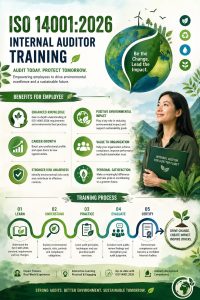 Course Content: ISO 14001 Internal Auditor Training
The ISO 14001 Internal Auditor Training Course covers essential topics required to understand and perform internal EMS audits effectively. The course structure is designed to provide both theoretical knowledge and practical insights into auditing processes.
- Module 1: Introduction to Environmental Management System: This module provides a foundational understanding of EMS concepts, including environmental aspects, impacts, and the importance of sustainability in modern business operations.
- Module 2: Structure & Overview of ISO 14001:2015 Requirements: Participants gain insights into the structure of ISO 14001, including key clauses, requirements, and how they apply to organizational processes and environmental performance.
- Module 3: Auditing Environmental Risk Management: This module focuses on identifying and evaluating environmental risks, helping auditors understand how organizations manage risks related to their operations.
- Module 4: Audit Concepts: Learners are introduced to auditing principles, types of audits, and the role of internal audits in ensuring compliance and continuous improvement.
- Module 5: Planning & Conducting an Internal Audit: This module explains how to plan, execute, and manage internal audits, including audit scheduling, checklist preparation, and evidence collection.
- Module 6: Reporting and Follow-Up of Internal EMS Audit: Participants learn how to document audit findings, report non-conformities, and ensure corrective actions are implemented effectively.
Key Skills You Will Gain from ISO 14001 Internal Auditor Training
- Understanding EMS framework and ISO 14001 requirements: Participants develop a clear understanding of Environmental Management Systems and how ISO 14001 standards are applied within organizational processes for effective environmental control.
- Ability to plan and conduct internal audits effectively: The training equips individuals with structured audit planning techniques and execution skills, ensuring audits are conducted systematically and professionally.
- Identifying environmental risks and non-conformities: Learners gain the ability to detect environmental risks and identify gaps in compliance, enabling organizations to take corrective actions promptly.
- Improved reporting and documentation skills: Participants learn how to prepare detailed audit reports that clearly highlight findings, non-conformities, and recommendations for improvement.
- Knowledge of ISO 19011 auditing guidelines: The course provides a strong foundation in auditing principles based on ISO 19011, ensuring consistency and reliability in audit processes.
Benefits of ISO 14001 Internal Auditor Training
- Enhances environmental compliance within the organization: Trained auditors help organizations comply with environmental regulations, reducing risks of penalties and improving overall compliance performance.
- Supports continuous improvement of EMS: Internal audits identify gaps and improvement opportunities, helping organizations enhance their environmental management practices continuously.
- Builds internal audit competency: Organizations can rely on trained employees to conduct internal audits, reducing dependency on external auditors and improving efficiency.
- Strengthens sustainability and environmental performance: The training supports better resource management and environmental practices, contributing to sustainability goals and reduced environmental impact.
- Improves career opportunities for professionals: Certified internal auditors are in high demand, and this training opens up opportunities in environmental management and auditing roles.
Course Features
- 2-day intensive training program: The course is designed as a short-duration program that delivers comprehensive knowledge and practical insights within two days.
- Continuous assessment and final examination: Participants are evaluated throughout the training to ensure understanding, followed by an examination to validate their knowledge and skills.
- Delivered by experienced real-time auditors: Training is conducted by highly experienced auditors who provide practical examples and real-world insights into environmental auditing.
Tutor(s)
The course is delivered by trainers who are highly experienced as real-time auditors, bringing practical knowledge and industry expertise into the training sessions. Their experience helps participants understand real-world audit scenarios and challenges.
How This Course Differs from Lead Auditor Training?
While the ISO 14001 Internal Auditor Training Course focuses on auditing specific parts of an EMS, it does not cover the entire ISO 14001 standard in detail. It is designed to help participants conduct internal audits rather than full certification audits.
Professionals who wish to conduct external audits or lead audit teams for certification purposes should consider enrolling in an ISO 14001 Lead Auditor course. This advanced training provides in-depth knowledge and skills required to assess full compliance with ISO standards.
How to Apply for ISO 14001 Internal Auditor Training?
Download the application form, fill in the required details, and send it via email to the concerned team. Once your application is reviewed, the support team will contact you with further details regarding training schedules and enrollment procedures.
For further clarification or assistance, you can contact the team directly, and they will guide you through the process.
